Educational · Women’s Wellness

The pantry ingredient most women overlook — and why their bodies use it differently.

It isn't the sugar. It isn't the flavoring. It's the one protein hiding inside an ordinary dessert box — the same protein your body slowly stops making enough of.

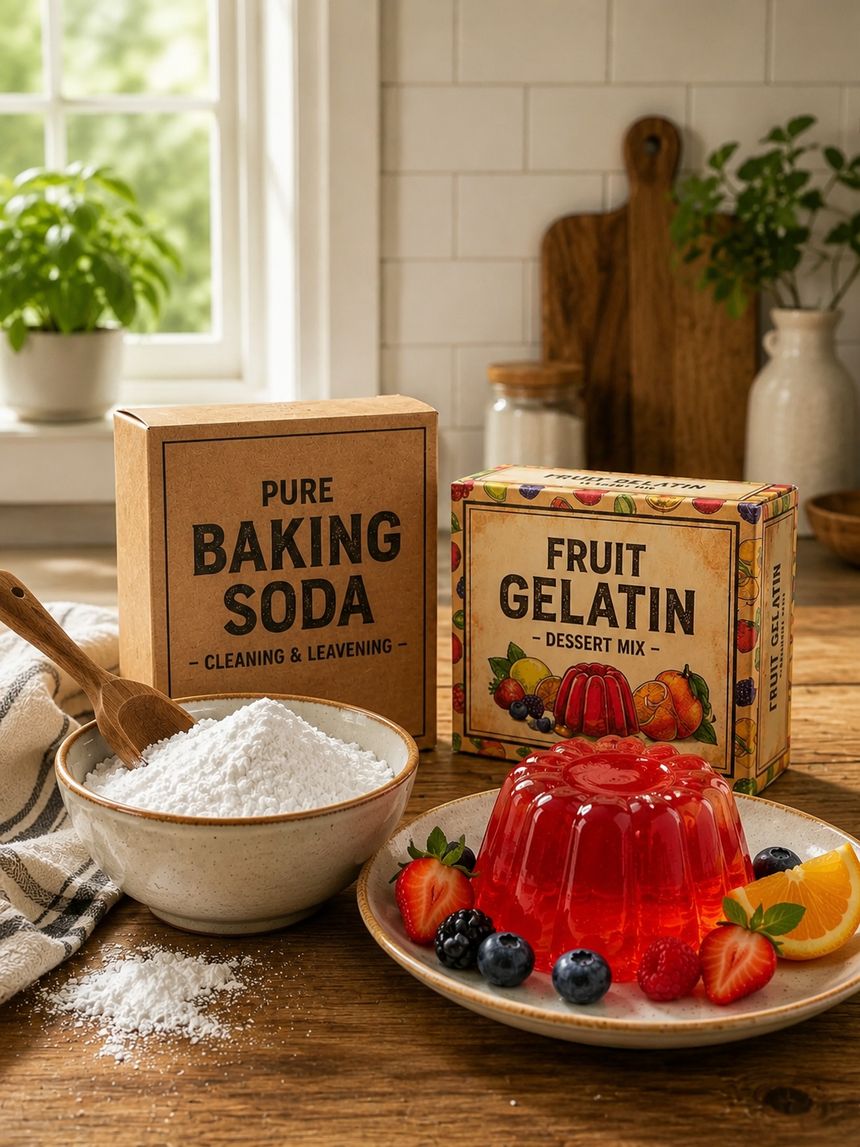
A box of baking soda beside a fruit gelatin dessert mix on a wooden kitchen counter, with a molded gelatin dessert and fresh berries on a plateFree presentationTwo boxes. One of them holds a protein worth understanding.4 minWatch the free presentation →

No sign-up. Educational content, presented in plain language.

What actually changes

Your habits didn't change. Your body's building blocks did.

Most women are told the problem is willpower. It's more useful to look at what quietly shifts underneath — in structure, in appetite signals, in the tissue that holds everything together.

01

Collagen production slows down

Collagen is the most abundant protein in the human body — the scaffolding of skin, hair, nails, joints and connective tissue. The body's own production begins tapering off from the mid‑twenties onward, and the pace of that decline is influenced by hormonal changes women experience across life.

02

Fullness signals get quieter

Protein is the macronutrient most closely linked to satiety — the sense of having had enough. When daily protein stays low, meals can end without that signal ever arriving, which is why the kitchen keeps calling an hour later.

03

Lean mass declines quietly

Lean tissue is metabolically active and it doesn't leave with an announcement. The scale can read exactly the same while the composition behind that number has shifted — which is why clothes fit differently even when the weight hasn't moved.

04

Traditional dieting cuts the wrong thing

Standard advice is subtraction: smaller portions, fewer calories, less food. What it rarely addresses is whether the building blocks the body needs are still coming in — so the plan gets harder to keep, and it gets abandoned. Then it gets blamed on discipline.

Sorting it out

Three things women are told that deserve a second look

Myth

“Once you hit 40, your metabolism collapses and there's nothing to be done.”

What research suggests

Large-scale energy expenditure research published in recent years found that, once you adjust for fat-free mass, total daily energy expenditure stays remarkably stable through most of adulthood before declining later in life. The number on the scale is not being sabotaged by a birthday — but body composition, activity and daily habits all shift, and those are the parts worth paying attention to.

Myth

“If I want results, the answer is always to eat less.”

What research suggests

Eating less of everything also means eating less protein — the nutrient most associated with feeling satisfied after a meal and with maintaining lean tissue. Composition of the plate, not only its size, is part of the conversation. A smaller plate that leaves you hungry at 4 p.m. is a plan that ends at 4 p.m.

Myth

“Collagen is a beauty ingredient. It's about skin, and that's it.”

What research suggests

Collagen makes up roughly a third of the body's total protein content. It's structural material for tendons, ligaments, cartilage, the gut lining, hair and nails — skin is simply the part you can see in the mirror. Treating it as cosmetic misses most of where it lives.

The approach

Three steps. No restriction lists, no food you have to hate.

The presentation walks through a sequence, and the order matters — each step is what makes the next one survivable.

01

Anchor the day with protein, early

Most women front-load carbohydrate and back-load protein — coffee and toast in the morning, the only real protein at dinner. Moving a meaningful portion earlier changes how the rest of the day feels, because the fullness signal arrives before the cravings do rather than after.

02

Turn the evening craving into a protein moment

The hour after dinner is where most plans quietly fall apart. Instead of fighting it, this step redirects it — using gelatin, a food that has been part of home kitchens for generations, as the base of something you actually look forward to. It's the part of the day people usually try to white-knuckle. This step stops asking them to.

03

Repeat it until it stops being a decision

A habit is something you no longer negotiate with. The goal here is not a thirty-day sprint but a small, pleasant, repeatable ritual that survives a bad week, a holiday and a busy Tuesday — because the plan that survives those is the only kind that ever adds up.

See how the three steps work together →

Free presentation · about 4 minutes

Where it comes from

Your great-grandmother wasn't taking a supplement. She was simmering one.

For most of culinary history, nothing on the animal was discarded. Bones, skin and joints went into the pot and stayed there for hours, and what came out was a broth that turned thick and wobbly in the cold pantry overnight. That wobble had a name long before it had a label: gelatin.

It became savory aspics, it became consommé, it became the trembling molded desserts that show up in old recipe cards and holiday photographs. In Brazilian, Portuguese and Eastern European kitchens alike, it was ordinary food — served to children, to the elderly, to anyone recovering from illness, because everyone's grandmother seemed to agree it was strengthening, even if nobody could say precisely why.

The reason is not mysterious. Gelatin is cooked collagen. When collagen is heated in water long enough, it unwinds into a form the body can actually use — and when it's broken down further into shorter chains, it becomes what labels today call hydrolyzed gelatin, or collagen peptides: the same food, made soluble enough to stir into something cold without setting into a block.

What changed is not the ingredient. What changed is that the long simmer disappeared from modern kitchens. The pot went away, and quietly, so did the collagen that used to come with it — while honey, the other pantry staple that has kept its place beside it for centuries, stayed exactly where it was.
The insight

The dessert in the photograph is not the point. The protein inside it is — and the reason it fell out of the modern diet has nothing to do with nutrition and everything to do with the fact that nobody keeps a stockpot on the stove for eight hours anymore.

Worth noticing

Six things women commonly report — and rarely connect to each other

None of these is a diagnosis, and none of them points to a single cause. They're simply the observations that come up again and again, usually filed away separately as unrelated annoyances.

⚠️

Hungry again too soon

The meal ended, the plate was full, and ninety minutes later the kitchen is calling anyway.

⚠️

Skin that lost its bounce

Not lines, exactly — more that the skin doesn't spring back the way it used to, especially on the hands and neck.

⚠️

Stiff mornings

Knees and fingers need a few minutes to loosen up before the day feels normal.

⚠️

The scale says nothing changed

Same number as last year. Different fit in the same pair of jeans.

⚠️

The 4 p.m. drop

Energy falls off a cliff mid-afternoon, and the fix is usually sugar, which works for forty minutes.

⚠️

Nails that split and peel

They break before they grow, and hair feels thinner at the ends than it once did.

These are common experiences, not symptoms of a specific condition. If any of them concerns you, speak with your healthcare professional — this page is not a substitute for that conversation.

In their words

What women say after changing one small habit

“[TESTIMONIAL 1 — paste a real, verified customer statement here. Keep it focused on habit, satiety or routine, with no weight-loss numbers and no health claims.]”

[Verified customer name]

[City, State] · Verified purchaser

“[TESTIMONIAL 2 — paste a real, verified customer statement here.]”

[Verified customer name]

[City, State] · Verified purchaser

“[TESTIMONIAL 3 — paste a real, verified customer statement here.]”

[Verified customer name]

[City, State] · Verified purchaser

Testimonials reflect the personal experience of the individuals quoted and are not typical. Individual results may vary. Nothing above is a promise, guarantee or expected outcome.

Questions

Answered plainly

What is hydrolyzed gelatin?

Gelatin is collagen that has been cooked — heated in water until the tightly wound protein unravels. Hydrolyzed gelatin has been taken one step further: the long protein chains are broken into much shorter ones, called peptides. The practical difference is behavior. Regular gelatin sets into a firm block when it cools; hydrolyzed gelatin dissolves in cold liquid and stays dissolved, so it can be stirred into coffee, water or yogurt without turning into dessert. Chemically, it's the same food your great-grandmother made in a stockpot.

Is gelatin the same thing as collagen?

They are three stages of one material. Collagen is the protein in its native, intact form. Gelatin is that protein after cooking. Collagen peptides — also sold as hydrolyzed collagen or hydrolyzed gelatin — are gelatin broken down further. The labels differ mostly by how the product dissolves and how it's marketed.

Do I have to give up the foods I like?

The approach in the presentation is built around addition rather than subtraction. It doesn't hand you a banned-foods list — it works on the assumption that plans requiring you to dislike your own dinner have a short shelf life. What you eat is your decision, ideally one made with your healthcare professional if you have dietary restrictions.

Is this a diet?

No. There's no calorie target, no phases, no weigh-in schedule. It's a single habit added to a day you're already living. That's also why it isn't dramatic — habits are slow by design, and anything promising otherwise is selling something else.

Is it suitable for vegetarians or vegans?

No. Gelatin and collagen are animal-derived by definition — they come from connective tissue, and there is no plant that produces them. Products marketed as “vegan collagen” contain nutrients intended to support the body's own collagen production; they do not contain collagen. If you avoid animal products, this is not for you, and we'd rather say so plainly than sell around it.

How long before it stops feeling like effort?

Habit-formation research points to a wide range — often several weeks to a few months — depending on the person and how easy the behavior is to repeat. Anyone quoting you an exact day is guessing. The useful signal isn't a date; it's the first time you do it without deciding to.

Is any of this medical advice?

No. Everything on this page is educational content about nutrition and daily habits. It is not intended to diagnose, treat, cure or prevent any disease, and it is not a substitute for the judgment of a qualified healthcare professional — particularly if you are pregnant or nursing, managing a medical condition, or taking medication.

The full presentation

The whole explanation takes about four minutes.

Where the protein went, why women's bodies notice its absence first, and the small kitchen habit that puts it back — explained from the beginning, in plain language.

Watch the free presentation →

No sign-up required · Educational content · You can close it at any time